
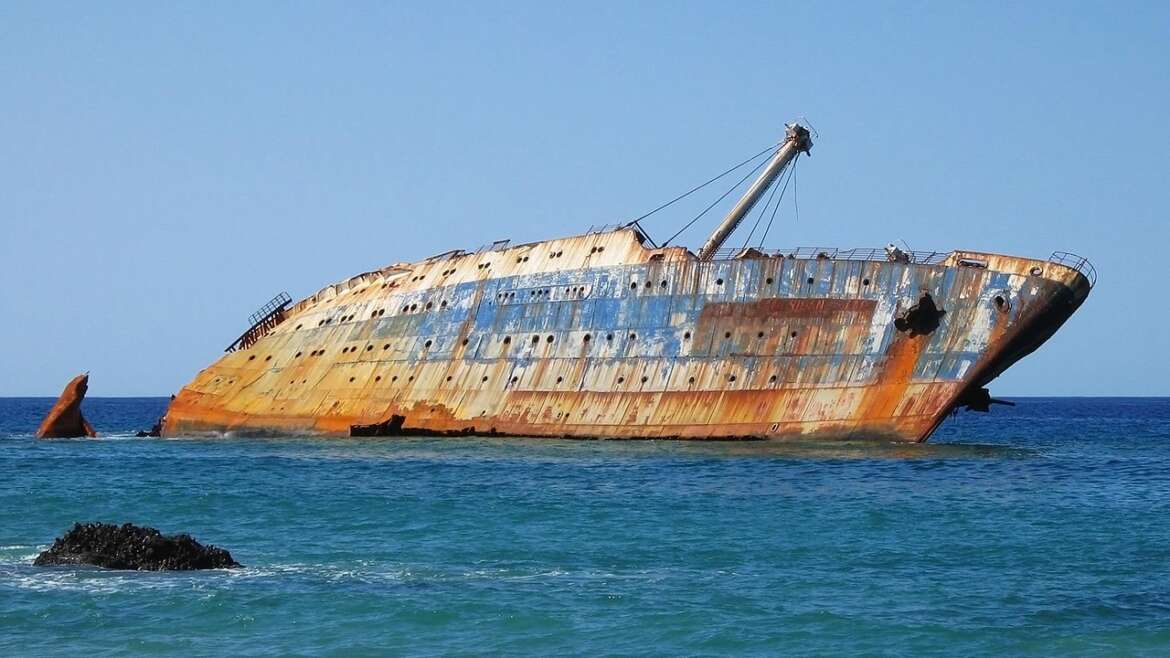
A shipowner dealing with a serious casualty must make decisions on incomplete information. Can the vessel be refloated? Is repair commercially sensible? Who should undertake the work, on what terms, and with whose approval? Hull underwriters and the P&I Club will have different interests in those answers. The coastal State has a more immediate concern: how quickly the danger can be brought under control.
The Merchant Shipping (Wreck and Salvage) Rules, 2026, published on 23 October 2026, give that concern considerable force. They replace the 1974 rules and establish machinery for reporting, removal, financial security, salvage remuneration and advance response arrangements. Their most contentious provision allows the authority to issue a notice of abandonment for the owner or declare a constructive total loss. That language reaches into decisions ordinarily made by the assured under its insurance contract.
Owners and insurers should examine these provisions together. An owner may lose practical control of the casualty while remaining responsible for its cost. Equally, a statutory declaration should not be assumed to produce an insurance recovery.
Indian and foreign vessels
Foreign registration does not take a casualty outside the regime. The Act’s wreck chapter covers wrecks within India and its coastal waters, subject to its exclusions. “Coastal waters” is a defined expression extending beyond a shorthand reference to the territorial sea. The salvage chapter has its own application provisions, including proceedings instituted in India. The relevant statutory scope must therefore be checked for the particular casualty.
Under section 236 of the Merchant Shipping Act, 2025, the reporting obligation expressly extends to Indian and foreign ships. Rule 3 prescribes the information to be supplied by the master, owner or operator: the wreck’s position and condition, cargo and pollutants, the hazard presented and the proposed mitigation. A master should treat reporting as a statutory casualty obligation. Notification to a local agent or insurer is no substitute for notification to the prescribed authorities.
Removal remains the owner’s responsibility
Rule 5 places primary responsibility for removal on the registered owner or operator, with the receiver of wreck coordinating and supervising the response. The owner must appoint an appropriately retained salvor or pollution response operator within the time and manner directed.
Delay has consequences beyond a complaint about progress. The statutory removal machinery permits intervention at the owner’s expense. Rule 27 separately provides for the authority to undertake or assume control of salvage where no salvor is appointed, necessary measures are not taken in time, or a hazardous wreck is not removed in accordance with directions. It also contains a broad residual ground for intervention where the authority considers it necessary and permits the appointment of a government or private entity.
Abandonment and constructive total loss
Rule 5(3) deserves close attention. Its trigger is more specific than a simple failure to remove a wreck. It addresses an owner’s delay or failure to declare a constructive total loss despite a hazard to navigation, safety or the marine environment. Following assessment and consultation with the advisory committee, the authority or receiver may issue an abandonment notice on the owner’s behalf, declare a constructive total loss, or declare a wreck or facilitate removal. The owner’s removal responsibility survives.
The difficulty lies in the legal tools selected. Whether a ship is a hazard and whether it is a constructive total loss under a hull policy are different questions. A vessel may require urgent public intervention while its repair remains economically viable under the applicable insurance test.
Under marine insurance principles, constructive total loss depends on the governing law, policy wording and the relevant facts. Notice of abandonment ordinarily involves an election by the assured and communication to its insurer. It can affect rights in the insured property and the treatment of the claim. A public authority making an operational decision is not necessarily applying those contractual tests.
Rule 5(3) can therefore displace the owner’s decision in practice. A declaration followed by removal or disposal may foreclose recovery options, change the available evidence and affect the residual value in which hull underwriters or mortgagees have an interest. The concern is substantive even if an insurer remains entitled to dispute the legal effect of the declaration.
There is also a proper question about the limits of delegated legislation: how far can a rule concerned with wreck removal substitute an authority’s election for that of an assured, particularly if it is said to alter substantive insurance rights? That question remains open to legal challenge and interpretation; it is not a basis for declaring the provision invalid in advance.
Owners should notify hull underwriters, the Club and relevant secured interests immediately if rule 5(3) is invoked. They should seek the assessment and reasons, preserve survey and repair evidence, and address the proposed notice expressly. Any separate notice of abandonment required under the policy should be considered on its own timetable. Reserving insurance rights must accompany an effective response to the hazard.
Financial security under the Nairobi framework
The financial security provisions give the removal obligation a practical means of enforcement. Section 244 requires cover for Indian vessels of 300 gross tonnage and above and imposes corresponding insurance and onboard certification requirements on foreign ships of that size within the relevant area. Rule 6(1) requires the Indian registered owner to apply in Form A to its port of registry; the Registrar issues Form B once satisfied with the security.
Rule 6(2) also provides an Indian certification route for a foreign ship registered in a non-party State. Its owner or operator may apply to the Registrar after maintaining the requisite security. The optional application route must not be confused with an optional insurance obligation. Nor does it mean that every foreign vessel must obtain a second Indian certificate.
For a Club providing the underlying security, certification matters because section 244 permits direct claims against the security provider and restricts the defences available in those proceedings. The statutory certificate and the contractual terms of entry perform different functions. An owner should establish both that its certificate is acceptable and that the proposed response expenditure falls within its cover.
Salvage remuneration and freedom of contract
The rules preserve considerable freedom to agree salvage terms. Under rule 17, the statutory provisions on rewards and special compensation apply where no salvage contract exists between the salvor and registered owner.
In those cases, rule 18 assesses the reward by reference to factors including success, danger, effort and salved value. Rule 19 provides special compensation for operations involving an environmental threat, although its wording leaves uncertainty about entitlement and the maximum enhancement.
Owners and salvors should therefore agree remuneration clearly, while accounting for mandatory Indian law and the Act’s dispute provisions.
Advance response contracts also need careful drafting. Under rule 22, statutory rewards or special compensation are available only for services exceeding the contractor’s existing obligations. The agreement should clearly distinguish services covered by the standing fee from additional work and charges arising after a casualty.
Response contracts and the pressure on Clubs
Rule 30 requires the authority to require registered owners to maintain valid contracts with retained salvors and retained marine pollution response operators. Where a provider is approved for both functions, it requires a single contract covering both services. The salvage arrangements must provide suitable resources and trained personnel for functions including firefighting, lightering, dewatering and emergency towing, within the stipulated response times. Pollution arrangements must address containment, recovery, shoreline protection and the relevant contingency plans.
This is an obligation to secure operational capability. A contract bearing the name of an approved provider will be of limited value if the promised assets are unavailable or deployed too far away. Retention status, geographic coverage, subcontracting and competing casualty commitments all merit scrutiny. The practical application to particular ships should be checked against the authority’s directions and current retained-provider lists.
Owners will naturally look to their P&I Clubs for assistance with these contracts and for the cost of a response. The work of reviewing them is likely to reach Club claims and underwriting teams well before any casualty. The statutory duty, however, is not transferred to a Club by rule 30, and the rule does not itself make a Club responsible for a retainer or every liability assumed under the contract.
Conclusion
The immediate task is to align the ship’s response plan, retained-provider contracts and insurance arrangements. The master needs a clear reporting procedure. Shore management needs authority to activate a contractor without avoidable delay. Insurers need early access to the casualty evidence and proposed contractual commitments.
The difficult cases will arise where the owner is responding but the authority considers the response inadequate, or where regulatory action overtakes an unresolved hull claim. In those cases, a credible removal plan and a contemporaneous record of the owner’s decisions will matter more than a general assertion of ownership rights.
Owners and Clubs should use the period before an incident to settle the terms on which assistance will be available, how it will be paid for and who can commit the ship. Those are uncomfortable discussions to begin after control has already passed to the authority.
This article is intended as a general summary and does not constitute legal advice. Specific advice should be taken on particular facts.